Driving Motor Racing Simulator
- 4.5
- Rating
- 50.00M
- Installs
- Free
- Price

 Analysis by App-foxy
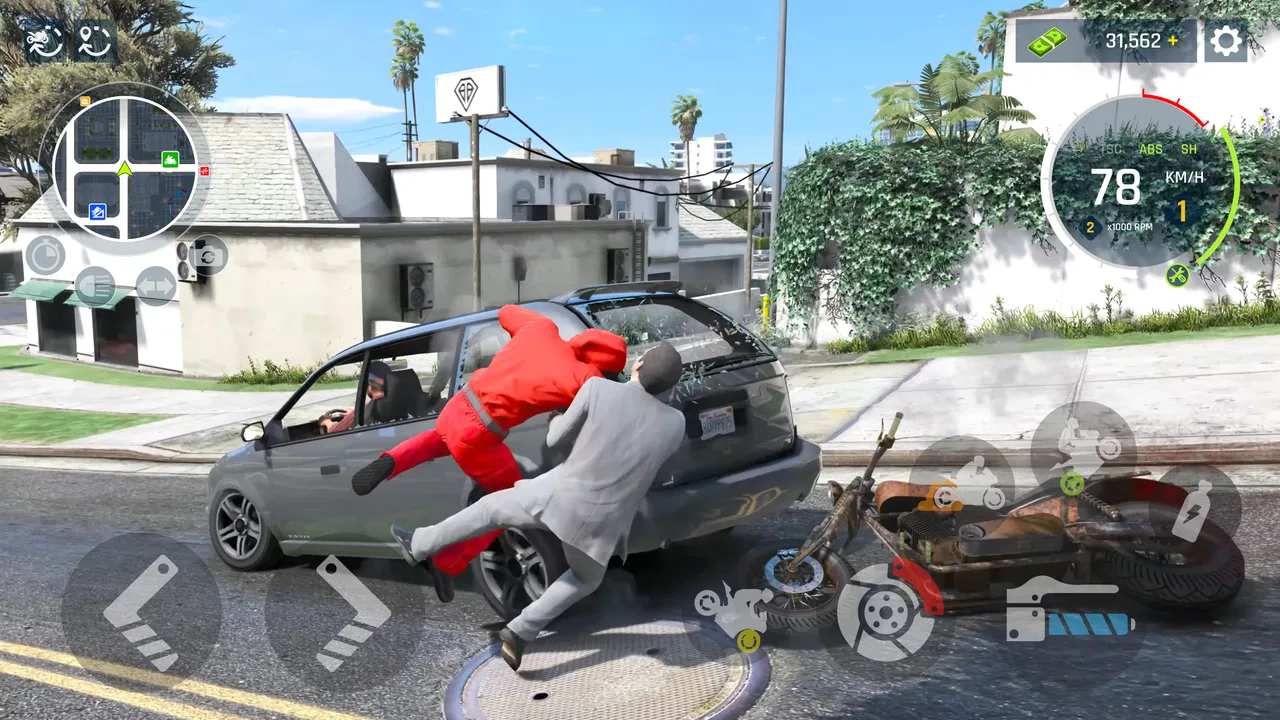
I approached Driving Motor Racing Simulator expecting a straightforward motorcycle game and found something aimed more at free-roaming practice than at a tightly structured race series. Its central appeal is the feeling of learning a bike in an open environment, where control matters as much as speed. That makes it a different proposition from a typical lap-based racer: you are not only chasing a finish line, but also trying to understand how the motorcycle responds when you turn, accelerate, and recover from mistakes.
Digital Payment Tech presents it as a free racing game for Android, with a Teen content rating. It has attracted a 4.6 average from roughly 15 thousand ratings and passed 10 million installs, which suggests that the open-world motorcycle idea has reached a substantial audience. The game is currently at version 1.3.8, and it requires Android 8.1 or later. I would still treat those figures as a starting point rather than a guarantee that every device will deliver the same experience, because driving games can feel very different depending on screen size, performance, and control comfort.
How the open-world motorcycle experience feels in practice
The best way to understand this game is to stop comparing it immediately with a traditional championship racer. In a conventional racing title, the track tells you what to do: brake here, take the corner, overtake, and repeat. Here, the open-world setting changes the rhythm. I found myself spending more time building a feel for movement and less time following a fixed competitive routine. That is useful if you enjoy the process of mastering controls, but it can feel unfocused if you only want short races with clear objectives.
You May Also Like

 AccuWeather: Weather Radar
AccuWeather Review: A Quick, Clear Forecast for Everyday Decisions
For everyday plans, the best forecast is the one you can understand quickly. AccuWeather makes rain timing, radar, and local conditions easy to act on, with a few trade-offs.

 Hill Climb Racing
Why Hill Climb Racing Still Turns Crashes Into One More Run
A tiny car, a bumpy hill and one more upgrade: Hill Climb Racing keeps resurfacing because its simple chaos makes every near-miss feel personal.

 AliExpress - Shopping App
AliExpress Makes Global Shopping Feel Personal, but Shoppers Bear the Risk
AliExpress turns a global marketplace into a pocket-sized discovery engine. Its reach is useful, its shopping loop compelling, and its trade-offs easy to miss.

 Lords Mobile: Kingdom Wars
Lords Mobile Is a Kingdom-Building Routine, Not a Quick Match
A case-by-case verdict on the building, battles, device demands, and social commitments that make Lords Mobile rewarding for some players and exhausting for others.

 PDF Scanner app - TapScanner
TapScanner Makes Paperwork Easier to Capture, Check, and Share
TapScanner makes scanning with a phone feel less like a rescue operation and more like a dependable step in getting work done. Its capture tools are useful, though not flawless.

 Block Blast!
 Shows How Much a Puzzle Game Can Leave Out
A quiet grid game shows why puzzle players increasingly value instant clarity, repeatable skill and low-pressure play—and where the genre still needs to catch up.
More From Our News Desk
View All News


The motorcycle is the main character. Small input differences matter because a two-wheeled vehicle does not feel as forgiving as a car. A player who presses everything aggressively may move quickly for a moment, then lose control when a turn arrives. I had better results by treating acceleration as something to manage rather than something to hold continuously. That is one of the first practical lessons the game encourages: smooth inputs are usually more valuable than dramatic ones.
For a new player, I recommend using the early sessions as training rather than judging the game by how quickly you can travel. Pick a familiar stretch of road, repeat the same turns, and notice where the bike begins to feel unstable. This simple routine helps separate two problems that are easy to confuse: poor timing and uncomfortable controls. If the motorcycle behaves predictably but your inputs are too abrupt, practice will help. If the controls themselves feel awkward on your phone, no amount of repetition will completely solve that issue.
The open-world format also gives the game a more relaxed use case. I can imagine opening it during a short break, riding around without committing to a long event, and closing it after a few minutes. That is more approachable than a racer that expects a full tournament session. On the other hand, players who want a strong sense of progression may find the freedom less satisfying unless they enjoy setting personal goals, such as completing a route cleanly or improving their cornering consistency.
Controls are the real test
In my experience, the controls decide whether this game becomes enjoyable or frustrating. Motorcycle games demand more attention than many arcade driving titles because the rider’s balance and direction are closely connected. I found it helpful to make shorter steering movements instead of dragging across the screen with large gestures. A gentle correction keeps the bike stable, while an exaggerated movement can turn a manageable bend into an unnecessary crash.
There is also a useful distinction between learning the road and learning the interface. When I repeated a route, I could focus first on where the turns were, then on how much input each turn required. Trying to solve both problems at once made the ride feel chaotic. Players should therefore resist the urge to judge their skill after one attempt. A few deliberate repetitions reveal whether the difficulty comes from the environment or from a control habit that needs adjusting.
This approach is especially valuable for younger players who are attracted by the motorcycle theme but have not played many driving simulators. The Teen rating does not make the game unsuitable for every younger user, but it is still worth considering the intended audience before handing over a device. The experience is better suited to someone comfortable with repeated practice and occasional frustration than to a player looking for a completely effortless arcade ride.
Phone size makes a noticeable difference to comfort. On a compact display, steering can feel cramped because the fingers cover a larger portion of the visible area. A larger screen gives more room for precise movement, though it does not automatically make the controls easy. I would test a short ride before deciding whether the game deserves a long session. That quick test answers a more useful question than the download itself: can you make small, repeatable inputs without blocking your view?
What the current version means for returning players
Version 1.3.8 is the version I would use as the reference point when considering the game today. The release date was April 28, 2025, so the product is still relatively young compared with long-established racing franchises. That matters when interpreting its current shape. A newer game may feel energetic and accessible, but it may also lack the depth, polish, and variety that have accumulated in older alternatives over years of updates.
I would not assume that a version number alone transforms the experience into a finished simulation. What matters in daily use is whether the current build gives you a reliable motorcycle ride, clear enough feedback, and enough reasons to return. My impression is that the game’s identity remains tied to open-world riding and control mastery rather than to a broad professional racing package. That focus is a strength when it matches your taste, but it also defines the limits of what you should expect.
For existing users, a current-version check is sensible before making a judgment based on an older session. A game can feel different after updates even when its basic concept remains unchanged. I would pay attention to how consistently the motorcycle responds, whether loading and movement feel comfortable on your device, and whether the available riding experience still gives you something to practice. Those are more meaningful signs of progress than simply seeing a newer number on the app page.
The free entry point is another important part of the current experience. You can try the game without paying upfront, which lowers the risk for curious players. However, in-app purchases range from $0.99 to $18.99 per item. I recommend treating the free version as a complete trial period: play enough to decide whether the controls and open-world format suit you before spending anything. A purchase cannot fix a control style that you already dislike.
Small techniques that make riding less frustrating
One technique that helped me was separating exploration sessions from improvement sessions. During exploration, I accepted mistakes and concentrated on learning the environment. During improvement sessions, I repeated a smaller section and focused on one goal, such as entering a turn under control or maintaining a steady line. This prevents every ride from becoming a vague attempt to “drive better” and gives you a clear reason for each restart.
Another useful habit is to slow down before the turn rather than trying to correct everything in the middle of it. In a motorcycle game, late corrections can create a chain reaction: a rushed steering movement leads to a wider line, which leads to another rushed correction. Preparing earlier gives you more room to recover. This does not make the game easy, but it makes the learning process more predictable.
I also suggest using short sessions when you are still adapting. Repeatedly forcing a long ride after several mistakes usually produces worse inputs, not better ones. A five-minute break can be more productive than another frustrated attempt. This is one reason the open-world structure works well for casual players: you can return to practice without feeling that you have abandoned a formal race or wasted a lengthy event.
A final tip is to judge progress by consistency rather than top speed. If you can complete the same route with fewer corrections, you are improving even if your fastest ride is not dramatically quicker. That mindset suits this game’s emphasis on becoming a capable rider. It also makes the experience more welcoming for players who enjoy gradual mastery instead of instant success.
Where it fits among racing alternatives
Compared with an arcade racer, this game asks for more patience. Arcade alternatives are usually better when you want exaggerated speed, immediate rewards, and forgiving handling. They can be more entertaining for a quick burst, especially when you are playing on a small phone or sharing the device with someone who does not want a learning curve. I would choose one of those games instead if my priority were simple, dramatic action from the first minute.
Compared with a dedicated motorcycle racing simulation, this title appears more approachable and less focused on formal competition. A specialist simulator is the better choice for someone who wants detailed race structure, highly technical setup, or a strongly competitive environment. The trade-off is that those games can demand more time and concentration. Driving Motor Racing Simulator makes more sense for a player who wants to ride through an open setting and improve basic control without committing to a professional-style racing routine.
It also occupies an interesting middle ground for people who normally play car games. A car racer often lets you recover from a mistake with a quick steering correction, while a motorcycle game makes balance and timing feel more exposed. If you are moving from cars to bikes, expect to relearn your instincts. Braking too late or steering too sharply can be much more punishing, so the first sessions should be treated as adaptation rather than a direct comparison of speed.
The title is less suitable for someone seeking a story-driven motorcycle adventure. Its strongest reason to play is the riding itself, not a narrative promise. Likewise, it may not satisfy players who need a dense calendar of events, a deep collection system, or a highly competitive online identity. I would skip it if those features are the main reason you install racing games. The open-world concept cannot replace structured content for every player.
Everyday use cases and practical expectations
Imagine having ten minutes before leaving home. You want something more involved than a puzzle but do not have time for a long campaign. This is where I see the game working well: start a ride, practice one section, explore a little, and stop without needing to finish a major competition. The session still has a purpose if you choose one small riding goal, and the free download lets you test that routine without an upfront commitment.
It can also work as a practice game for someone who enjoys improving hand-eye coordination. The benefit is not that it turns you into a real motorcyclist; it does not replace real-world training. Rather, it gives you a repeatable digital environment in which timing, steering, and controlled acceleration become familiar patterns. I would keep that expectation modest and use the game for entertainment, not as evidence of real riding ability.
Families should consider the Teen content rating before installing it for a child. The rating is part of the decision even when the game looks like a simple driving experience. Adults should also be aware that optional purchases are available. If the phone is shared, checking purchase settings beforehand is a sensible precaution, particularly because the individual items can reach $18.99.
Device compatibility is relatively broad because the minimum requirement is Android 8.1, but that does not promise identical performance across all phones. Older hardware may handle the game differently from newer devices, and a motorcycle title benefits from responsive input. If steering feels delayed or the screen becomes uncomfortable to watch, lowering your expectations is not the only answer; it may simply be a sign that another racing game is a better fit for that device.
What still feels limited
The biggest limitation is the tension between the word “simulator” and the casual accessibility of a mobile game. Players may arrive expecting the depth of a specialist simulation and instead find an experience centered on open-world riding and learning controls. That is not automatically a flaw, but it can create disappointment when expectations are too high. I would describe it as a motorcycle driving game with simulation-inspired intentions rather than a substitute for a full racing simulator.
Open-world freedom can also expose a lack of direction. Some players enjoy creating their own challenges, while others need clear objectives to maintain interest. If you belong to the second group, the game may lose momentum once the novelty of riding around fades. Before spending on any in-app item, I would make sure the basic free experience already gives you enough motivation to return. Purchases are most sensible when they support an experience you already enjoy, not when you hope they will create one.
The control learning curve is another source of friction. A motorcycle that feels rewarding after practice can feel unfair during the first few attempts, especially if you expect car-like handling. This is where the game asks more from the player than many casual racers. I consider that a worthwhile challenge for patient users, but a poor match for anyone who wants instant, low-effort entertainment.
There is also a practical difference between popularity and personal fit. More than 10 million installs show that many people have tried it, and the strong average rating is encouraging, but neither fact tells me how comfortable it will feel on your phone or whether its open-world structure matches your habits. I would use the free access to make that decision personally rather than relying only on the crowd.
Who should install it and what to watch next
I would recommend this game to motorcycle fans who enjoy learning through repetition, casual players who want a free-roaming driving experience, and car-racing fans curious about the different demands of two wheels. It is particularly appealing if you like setting your own targets: cleaner turns, steadier acceleration, or a more confident route through the environment. The game gives those players room to improve without forcing every session into a formal race.
I would be more cautious if you want a deep competitive simulator, a story campaign, or a tightly organized sequence of events. In those cases, a specialized racing title may offer a clearer long-term structure. I would also skip it if touch controls regularly irritate you, because the central experience depends too heavily on precise input for that weakness to remain minor.
When watching the game’s future, I would focus on whether later versions deepen the riding experience without losing its approachable open-world identity. Useful progress would mean better reasons to practice, smoother interaction between exploration and competition, and continued attention to control reliability. I would not judge future changes only by added content; for this particular game, making the motorcycle feel consistently readable may matter more than simply adding more things to see.
My final view is positive but measured. Driving Motor Racing Simulator is most enjoyable when I treat it as a motorcycle-control playground rather than a complete professional racing package. The free price makes trying it easy, the open-world idea gives short sessions a natural place, and the current version provides a clear foundation for players who like gradual mastery. Its limitations are equally clear: touch handling may take time, open exploration may feel under-directed, and the available purchases deserve restraint. If you want to learn the game’s rhythm and create your own riding goals, I think it is worth installing. Its real strength is the feeling of becoming more controlled, not merely becoming faster.
FAQs for Driving Motor Racing Simulator
01What are the system requirements for Driving Motor Racing Simulator?
Driving Motor Racing Simulator requires at least Android 5.0 or iOS 11.0 to run smoothly. For optimal performance, it is recommended to have a device with at least 2GB of RAM and a quad-core processor. Ensure you have at least 500MB of free storage space to accommodate the game and future updates.
02Does Driving Motor Racing Simulator support multiplayer mode?
Yes, Driving Motor Racing Simulator offers a robust multiplayer mode where you can compete with friends or other players online. The game includes various multiplayer options, such as racing against others in real-time or participating in weekly challenges and leaderboards to showcase your skills.
03Are there in-app purchases in Driving Motor Racing Simulator?
Driving Motor Racing Simulator includes in-app purchases that allow players to unlock additional cars, tracks, and customization options. While the game can be enjoyed without spending money, purchasing these items can enhance the gaming experience by providing access to exclusive content and faster progression.
04Can I customize my vehicles in Driving Motor Racing Simulator?
Absolutely! The game features a comprehensive customization system that allows players to modify their vehicles’ appearance and performance. You can change paint colors, upgrade engine components, adjust suspension settings, and more to tailor your car to your racing style and preferences.
05Is there a career mode in Driving Motor Racing Simulator?
Yes, Driving Motor Racing Simulator includes a detailed career mode where players can progress through different racing tiers and challenges. As you advance, you'll unlock new vehicles and tracks. This mode offers a structured gameplay experience, guiding you through various racing events and competitions.
Pros
- Realistic driving physics enhance gameplay.
- Wide variety of vehicles to choose from.
- Detailed tracks with diverse environments.
- Customizable controls for personal preference.
- Multiplayer mode for competitive racing.
Cons
- In-app purchases can be quite costly.
- Occasional lag on older devices.
- Limited offline features available.
- Some tracks require frequent loading times.
- Advertisements can interrupt gameplay.

Driving Motor Racing Simulator
Gallery